
From building VISHC’s first labs to mentoring a new generation of researchers, Prof. Hiệu believes the best AI is the kind that quietly improves lives at scale.
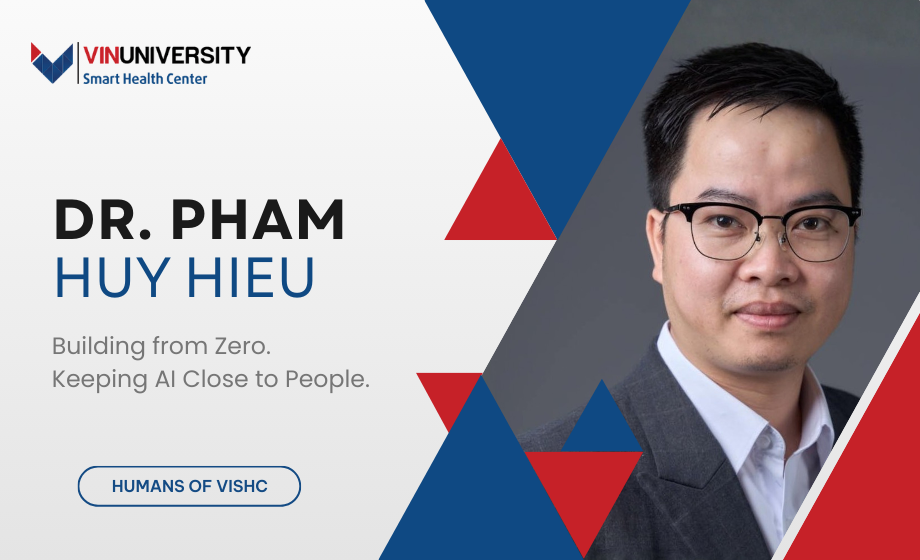
Dr. Phạm Huy Hiệu is a lecturer and researcher in computer vision and artificial intelligence. At the VinUni Illinois Smart Health Center, he leads smart health research groups and oversees labs that develop AI for healthcare. His focus is practical. He wants research to move beyond prototypes and become something hospitals and patients can truly use.
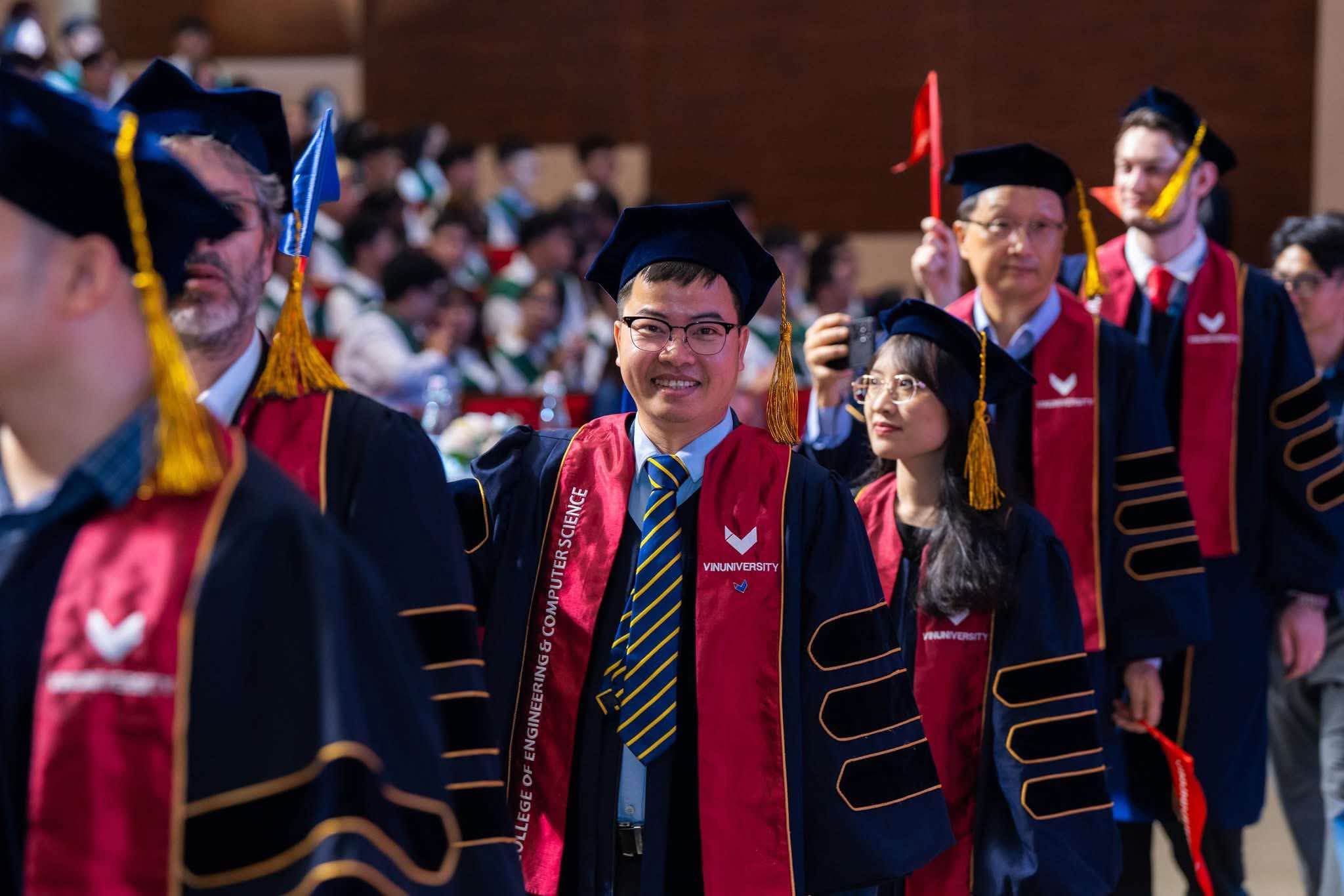
Dr. Phạm Huy Hiệu during VinUni’s academic procession, representing the College of Engineering and Computer Science
Students often describe him as approachable and humorous. They also say he sets high standards. He expects people to be responsible for their work, but he does not build a stressful lab culture. He prefers a working environment where people can concentrate, stay creative, and keep learning.
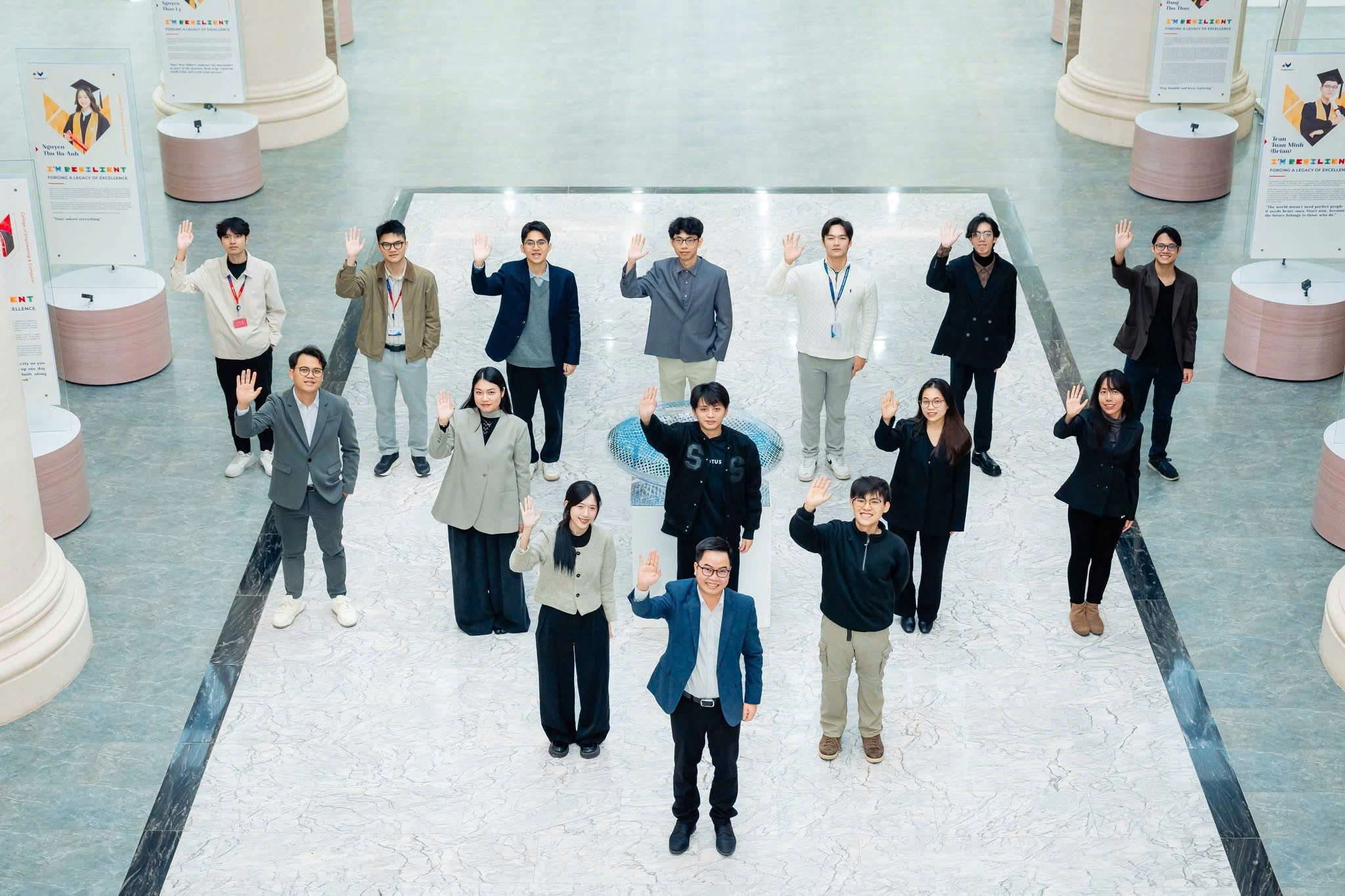
Dr. Phạm Huy Hiệu and his students at VISHC
A small personal story shows how he thinks about focus. For a long time, he chose the bus instead of driving. He knew his mind could drift back to work when he was on the road.
The story is light, but the lesson is clear. He treats focus as a responsibility. He notices what can go wrong and adjusts early. That same mindset shaped the way he helped build VISHC from the beginning.
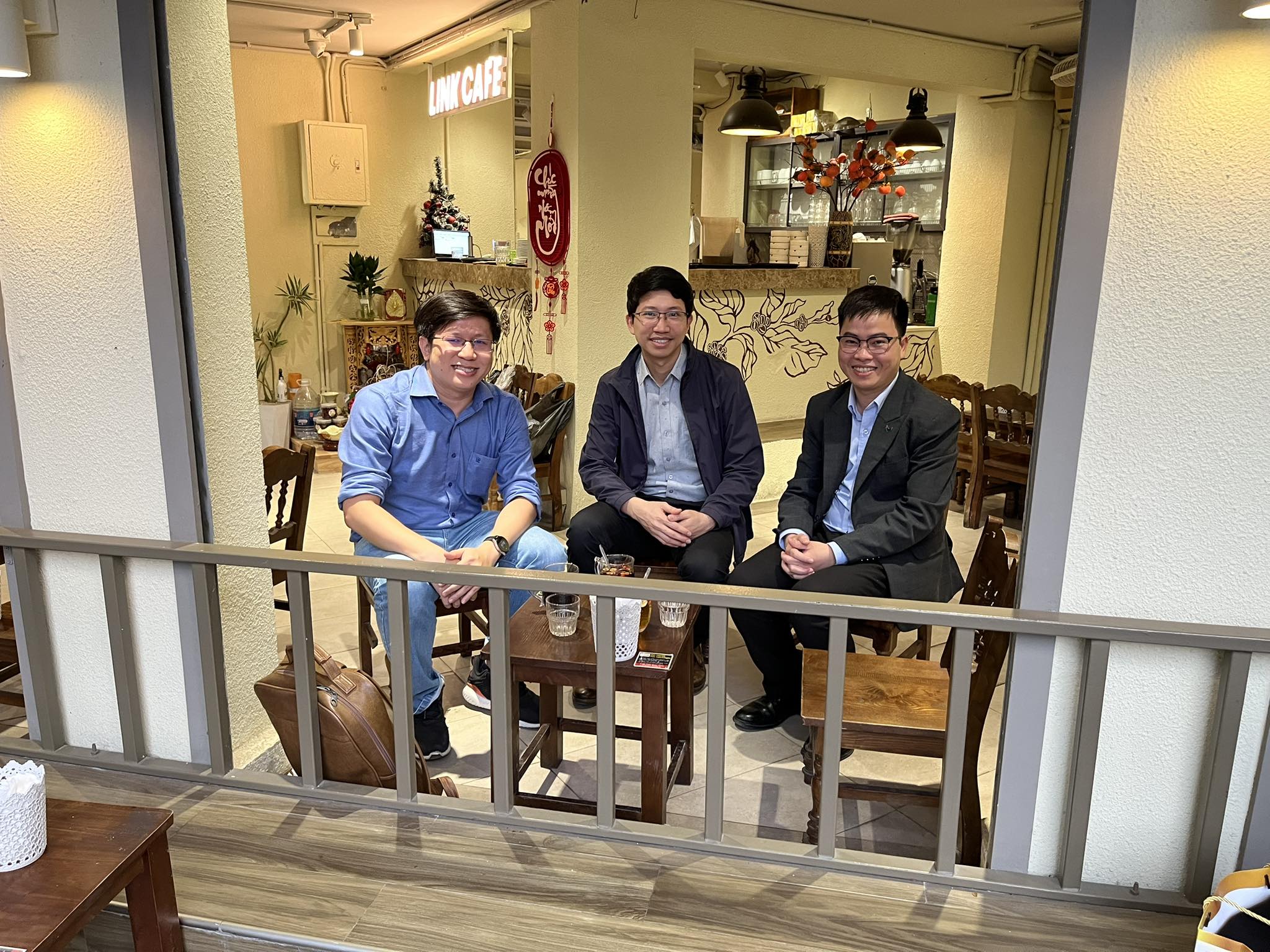
Dr. Phạm Huy Hiệu meeting collaborators and discussing research ideas outside the lab
Dr. Hiệu did not join VISHC after it was already established. He helped create it. In 2021, he and Professor Minh Đỗ laid the foundation. The work was practical and hands-on. They wrote proposals. They set up infrastructure. They built labs and research conditions so that teams could do real work.
That early period shaped how he defines what VISHC is today. He points first to interdisciplinarity. AI in healthcare cannot be solved by one field alone. It needs researchers, clinicians, and decision-makers working toward the same goal.
He also highlights something that guides many decisions at VISHC. Accessibility matters. It is not enough to build advanced technology. The solution must be low-cost enough to scale, simple enough to use, and realistic for the healthcare system.
For him, that principle is not just a statement. It shapes what problems are chosen and what success looks like.
His most memorable moments at VISHC are also not centered on himself. They are centered on students. He talks about the moment a student becomes a real researcher. The first paper. The first award. The first scholarship email. Those are the moments he remembers.

He has watched early research assistants grow quickly over the years. Many started as first or second year students. Now, many have gone on to graduate programs abroad. That growth is also connected to how he leads. He does not rely on pressure alone. He also does not let the environment become too loose. He tries to balance clear expectations with support, and he adjusts expectations based on each person’s level.
Dr. Hiệu chose AI in healthcare because he wants research impact beyond papers. He believes impact is real when research becomes a service, a product, or a tool that improves lives in practice.
He also believes healthcare is a special domain for scale. If a technology works, it can serve many people. That makes the social value large.
Over time, he has formed a clear test for what is worth building. A strong algorithm is not enough. The problem must be right. The solution must match the needs of Vietnam’s healthcare system. This is why he insists on collaboration across fields. This is also why he insists on listening first.
When asked about the work he finds most meaningful, he points to something many people underestimate. Datasets. He has spent years building large-scale medical datasets for Vietnamese communities. He sees this as essential infrastructure. Without reliable and standardized data, meaningful AI is difficult. With it, students can research, international teams can benchmark, and solutions can move closer to hospital deployment.
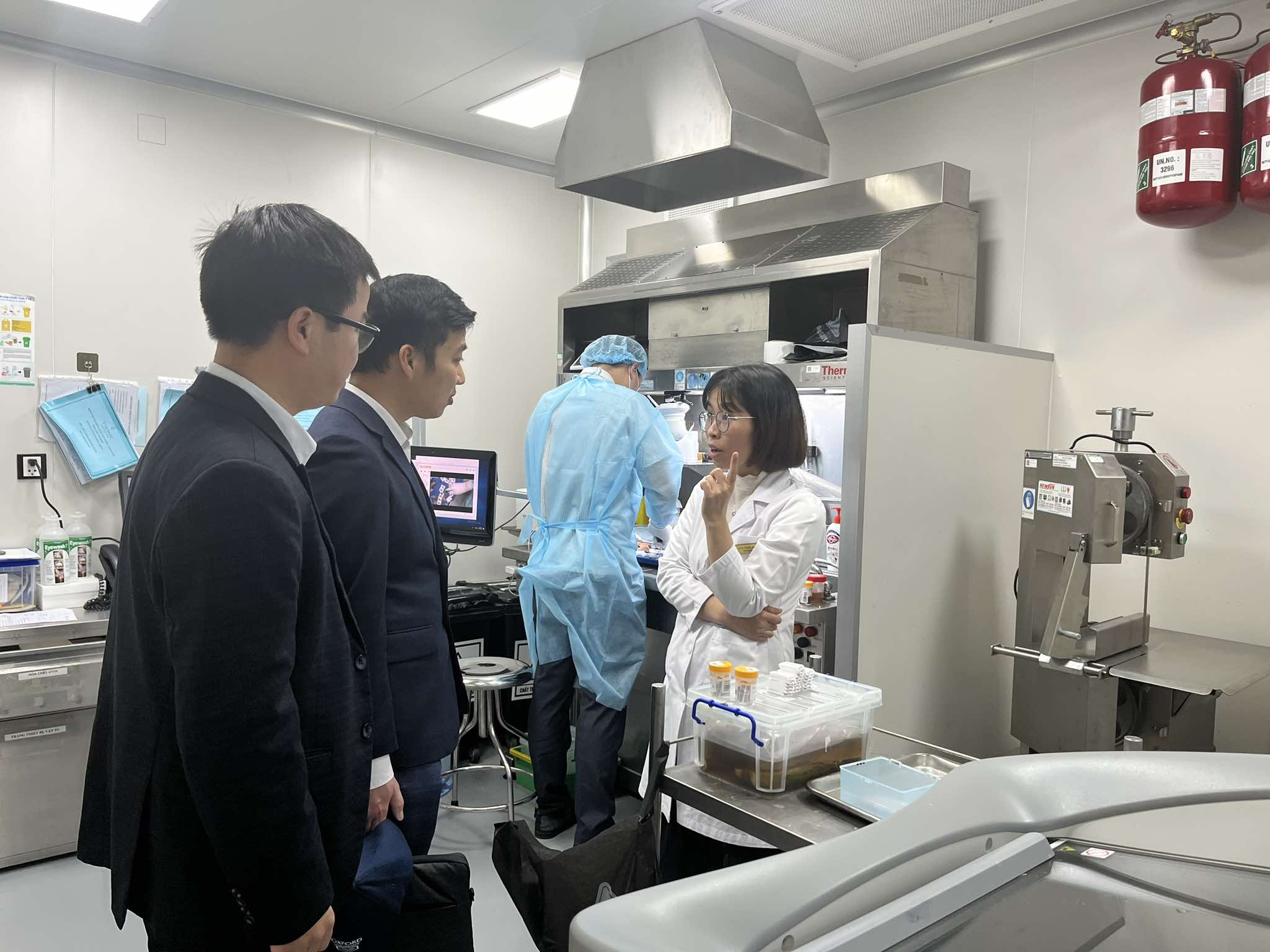
Dr. Phạm Huy Hiệu discussing ongoing experiments with researchers at the lab
What he hopes young researchers remember
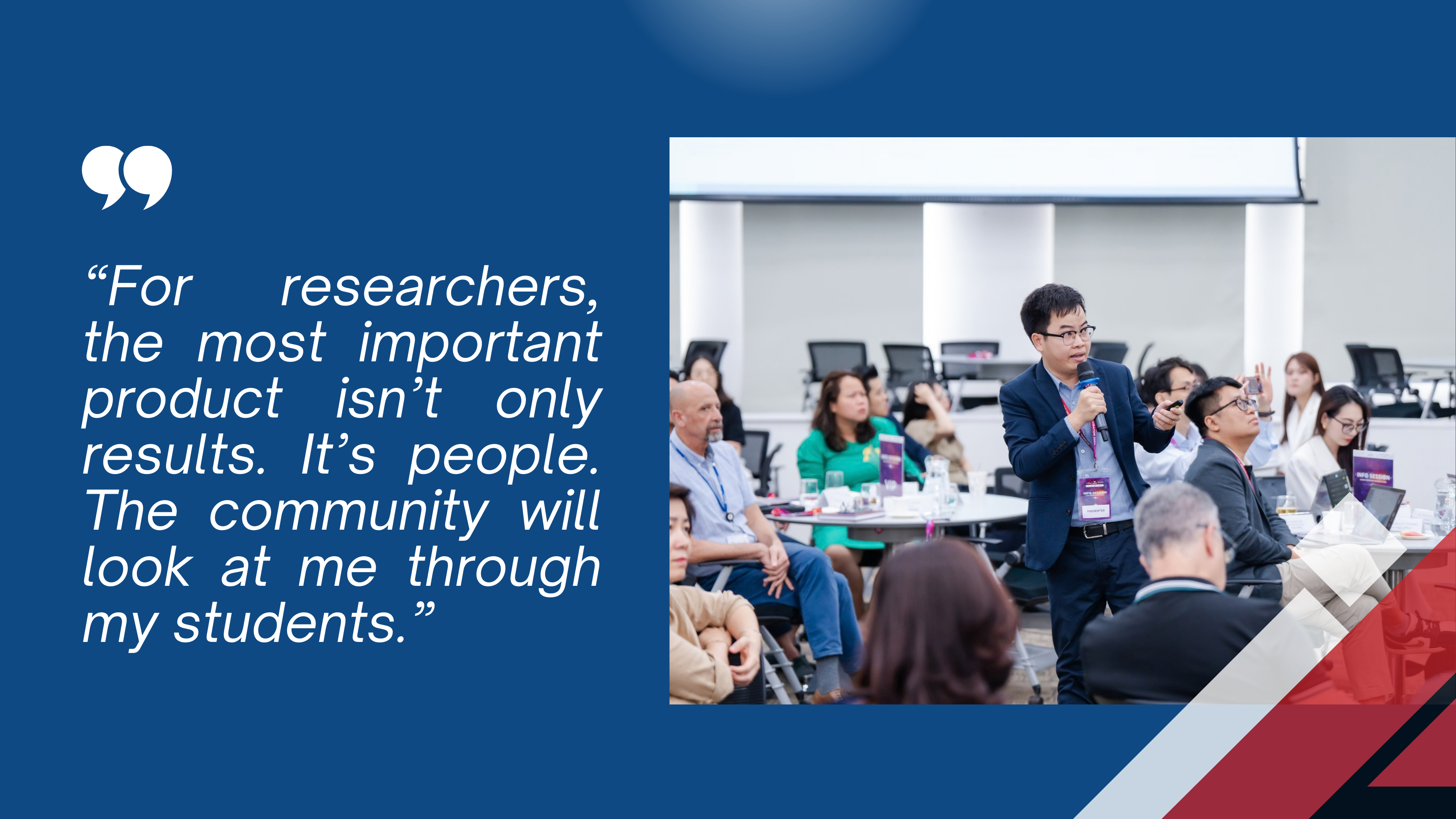
Despite heavy responsibilities, Dr. Hiệu tries to spend as much time as possible with students. He believes the most important output of a research center is not only results. It is people.
To young people who feel research is out of reach, his message is simple. The world changes fast. Technology changes fast. The best way to stay relevant is to stay open and keep learning.


